Thursday, 8 August 2013

Social media in the classroom: too risky?

Social media in the classroom
There are now more than 500 million users on Facebook, half of whom log on every day. Social media has transformed the way that people communicate with their friends, share their experiences and plan their lives but it’s also created new challenges and special problems for schools.

Teachers face the risk that their private lives might be exposed or that students may use the sites inappropriately.

Yet some schools are already harnessing the power of Facebook and Twitter to excite students about education.

We thought we would assess this by considering whether the pros outweigh the cons of using social media sites in education, particularly now that social media is such an integral part of students’ lives.

Thursday, 1 August 2013

40% rise in students with private tutors

Private tutoring vs. online alternatives
As the summer break gets under way, reports from the BBC and The Guardian suggest that parents will be turning their attention to hiring private tutors for their children.

The Guardian’s tuition report, released in April 2013, revealed that in the past year all of the private tuition businesses polled experienced a significant growth in the number of students applying, with some recording a rise of over 40 per cent.

Tuesday, 30 July 2013

Twitter gives shy students a voice

Distractions seem to be everywhere, with students of younger and younger ages having access to internet-enabled devices, even when they’re in the classroom. But for many ICT evangelists, mobile technology is not inhibiting students’ focus in class but instead helping to raise engagement and enhance teaching and learning.

Enrique Legaspi, a middle school teacher in Los Angeles is one such proponent. After attending a seminar in San Francisco on the uses of social media, he began to trial examples of real-world best practice within his own classroom.

Thursday, 25 July 2013

Apps that support your flipped classroom

Apps that support your flipped classroom
Flipping the classroom remains one of the hottest topics in education right now so we thought we’d bring you our top five most recommended apps and web tools to support you along the way.

Most of the apps listed have been selected for their relevance, usefulness and time-saving attributes − recommended by teachers who have introduced flipped learning into their classrooms.

Nearly all of the apps listed are free or offer schools a free trial to test whether the resource is suitable for their set of students and style of teaching.

Tuesday, 23 July 2013

Five best Google tricks to impress your friends

Five best Google tricks to impress your friends


Skewed vision, gravity loss and even playable guitars . . . before you start getting worried about what the heat has done to us, let me explain. We’ve been playing, uh, I mean working, long hours to bring you our top five favourite quirky Google ‘Easter Eggs’ which you can access simply by searching online.

Thursday, 18 July 2013

‘Gender balance in UK schools needs to change’

Gender balance in UK schools needs to change

If a recent report is anything to go by it would seem that male teachers are heavily under-represented, particularly in UK primary schools. The findings have led to a call from Education Secretary Michael Gove for an increase in the number of teachers from a ‘wider variety of backgrounds’.

Over the last few years teaching staff made up entirely of women have not been uncommon in England. A recent review found that on average, for every 10 teaching roles within primary schools, only one of those positions will be taken up by a male teacher. However, by September 2013 Gove intends to raise this so that one in every three positions will be taken by a male teacher.


Tuesday, 16 July 2013

4 things to know before flipping your classroom

Flipped learning is gaining momentum in more and more learning institutions around the world. Our e-learning consultant, @Chris_Hendon, a specialist coach in alternative pedagogies, has been advising on just how far schools have progressed in recent years.

Yet column inches and advice blogs tend to concentrate on the pros and cons, and advantages and disadvantages of the flipped classroom approach, and few have documented any real empirical evidence from UK contexts and case studies.

This seemed like a challenge to us and so, with the help of our flipped learning coach, we followed a school in Kent to assess their experiences, reactions and findings as they set about integrating flipped learning.

Thursday, 11 July 2013

Shy or meticulous: what does your handwriting say about you?

You may be giving away more than you think, how you write can indicate over 5000 personal traits. From the size of your lettering, spacing and shapes of letters to the dotting of your i’s and crossing of your t’s. Graphology, the study of handwriting and more specifically the analysis of a writer’s personality, characteristics and abilities, can even be used to find out if someone is lying or revealing underlying health ailments. 

Have a go; you might be surprised by what your handwriting says about you.

Tuesday, 9 July 2013

Seven ways to become a more connected educator

Are you constantly on the lookout for new ways to integrate technology in your classroom(s)?

Or are you hoping to become a more effective, digitally-focused educator?

If you answered ‘yes’ to either of the above questions then this will certainly be of interest. We’ve trailed through several key research reports, endless numbers of advisory blogs and taken on board the suggestions of our educational partners to bring you the must-know habits that make for an effective and connected teacher.

Whether you’ve got extensive experience in delivering e-learning initiatives or are just getting to grips with the growing digitalisation of teaching and learning, this set of tips will help you.

Monday, 1 July 2013

Could a longer school day raise student performance?


Could a longer school day raise student performance?
Eleven years ago, a school in Massachusetts was on the verge of closure. It was failing to meet the annual progress targets expected of it by the district and state.

According to their Director of Instruction, they had some of the lowest performing test scores in the city and a declining enrolment of new students.

They knew something had to be done so, between the senior management team and established course leaders, they agreed on an expanded learning programme which would see the length of the school day extended.

Wednesday, 26 June 2013

Top 3 student tech trends that teachers need to know

Now that the dreaded exam period is coming to an end and we all begin to look ahead to the summer holiday break, we’ve pulled together our three top tech trends that are likely to take place over the break.

So − while teaching professionals and students take a well-earned break, it’s important to appreciate the changes in preferences that young people will demonstrate towards technology so you’re fully prepared when students return in the autumn. What engages them, what they’ll be talking about and what teachers can harness and incorporate in their lessons to wow students and get them involved from the get-go.

Most schools and academic institutes have seen a dramatic rise in the level of technology available in the classroom, from iPads and netbooks to whiteboards and BYOD schemes. Digital technology is becoming more focused around the needs of education and it’s not likely to let up in the years to come.

As an educator, it’s important to understand what your students are doing online, what new technology they’re using and how they’re using it.

That’s why we’ve rounded up our shortlist of the top three trends likely to take place over the coming months.

Thursday, 20 June 2013

Five practical tips for iPad success in the classroom

When embarking on any process involving change it’s vital to prepare your teaching staff and students through communication, encouraging involvement and managing resistance.  Once you have planned your launch, at the stage of initiation the first goal is to build iPads into all daily school activities carried out by educators and learners. Start by ensuring staff begin to transfer daily routine tasks to their iPads and that they don’t relapse if they are pushed for time or other factors make it more appealing to use paper-based options.

The speed and success of the realignment will, however, be dependent on several factors:
  • Leadership team’s commitment to the change process (management)
  • Ensuring the infrastructure and resources are in place to support students and staff (preparation)
  • Communication of the new initiative and prior warning of the switch-over (communication) 
  • Staff’s understanding of and ability to demonstrate iPad best practice (training)
At the helm should be at least one senior leader, fully fluent and competent on the uses of iPads in education and who in the beginning can offer support and guidance on successfully transferring daily routines onto an iPad. While here at LearnersCloud we offer exam-tailored GCSE tutor videos that complement staff’s teaching strategies, it’s clear that many attempts to integrate mobile technology in the classroom fail or are at least delayed due to the lack of a skilled and experienced iPad leader. Here’s a simple checklist of iPad good practices that senior leaders must understand if they are to achieve successful integration:

Five everyday iPad practices that staff need to know:


Tuesday, 18 June 2013

I must not be rude about Michael Gove…

It would’ve been difficult to miss some mention of Education Secretary Michael Gove in the press recently – but you’d be forgiven if you dismissed it as another bit of quizzical leadership.

While it would be an understatement to describe Gove’s presence in Parliament and relationship with educators as tenuous, why are teaching professionals and union reps at odds with Gove and his latest GCSE ‘reform’ attempts?

While writing this article I keep referring to a self-applied challenge:

I must not be rude about Michael Gove,
I must not be rude about Michael Gove…


Friday, 14 June 2013

iOS 7: New kids’ category ‘parents will love’


 iOS7: New kids' category 'parents will love'


But will Apple’s new ‘curated selection’ features curb unauthorised in-app purchases?

With the launch of Microsoft’s XBOX One, Sony’s PS4 and Nintendo’s slew of new games titles this week, you could be forgiven for feeling a bit indifferent about tech news.

Yet while the gaming world went into overdrive, Apple announced some remarkable changes of their own.

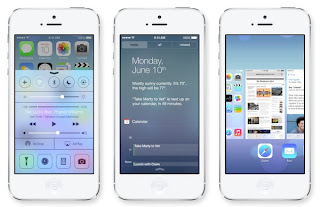
At Apple’s Worldwide Developers Conference 2013 (WWDC) all eyes were on the release of its new operating system. While many were in awe of the dramatic design changes, Eddy Cue, Apple’s Service Boss explained a feature that ‘parents are going to love’: the upcoming addition of a new Kids category to the firms App Store.

While the presentation swiftly passed over this, and on to their more mainstream releases such as the new Apple iRadio, parents and children’s app developers were left wanting to hear more.

Never one to shy away from a challenge we took it upon ourselves to investigate further the key features and to bring you a round-up of what the new Kids’ category means for parents and educators.

Tuesday, 11 June 2013

Flipped classroom: 60-second elevator pitch

Flipped classroom explained in 60 seconds
I recently attended a school in the North West to discuss the uses of mobile learning in supporting GCSE revision. As the conversation unfolded it turned out that teaching staff were not just interested in the independent applications of mobile technology but also what it could offer classroom teaching and learning.

After a short discussion to identify their school’s particular requirements, a colleague referenced the flipped classroom. While the surge in interest in the field has been overwhelming, a few of the SMT sitting alongside were unsure of what this meant. Not wanting to bore those who were familiar with the term, I set about explaining the basic principles in the form of an elevator pitch.

The meeting was a success and we are currently working in partnership with the school on several projects, including a pilot scheme to trial flipped learning. After the meeting, I was inspired by the challenge to define the flipped classroom in 60 seconds or less, which led me to offer this short and concise overview to help you if you are met with this challenge.

Please note: This should be regarded as a basic definition of the flipped classroom; it is not intended to offer a comprehensive account. For more information on the common key criticisms, best practice applications and to watch video case studies on its application in UK classrooms visit LearnersCloud.blog.com.


Friday, 7 June 2013

‘Mobile learning is eating the world’

Mobile learning is eating the world


The title, taken from Benedict Evans’ proclaimed research presentation may sound somewhat sensationalist but the figures he cites give it substance.

Whether you’re directly involved in ICT integration within your school, college or district or just an information seeker, Benedict’s findings show the increasing impact mobile devices have had over the past few years and highlight the inevitability of the future of mobile devices, both in consumer markets and in the education sector.

The conclusion drawn from this body of research is not just that mobile learning and mobile browsing is on the rise but that in the coming years mobile devices will infiltrate all aspects of our lives.

Below, I’ve embedded Benedict’s presentation: as you’ll see the study is presented as a short slide show with the stats speaking for themselves.

Thursday, 30 May 2013

How to implement a 'Bring Your Own Device' (BYOD) scheme

'Bring Your Own Device' (BYOD) scheme
As schools throughout the UK struggle to keep up with the costs of digital learning technologies many are initiating their own Bring Your Own Device (BYOD) programmes, encouraging students to bring their own tablet, laptop or smartphone device with them into class.

Generally speaking, there are three main reasons why a school would adopt a BYOD scheme: 
  1. Student familiarity
  2. Bridge between formal and informal learning
  3. Cost savings
Yet while digital learning and the prospect of students bringing in their own devices is gathering increasing exposure and support there is also growing concern that BYOD programmes are further expanding inequalities between low and higher income families as well as encouraging new forms of bullying.

Tuesday, 28 May 2013

Facebook privacy: Only 9% of students are 'concerned'

 Facebook privacy: only 9% of teens are 'concerned'
Teens are sharing more information about themselves on social media sites than they have in the past, but they are also taking a variety of technical and non-technical steps to manage the privacy of that information. Despite taking these privacy-protective actions, teen social media users do not express a high level of concern about third-parties (such as businesses or advertisers) accessing their data; just 9% say they are “very” concerned.

Thursday, 23 May 2013

Flipped learning: key criticisms explained

Flipped learning: key criticisms explained
In our previous blog posts, flipped learning has been a topic that's gained immense interest, but it has also been one that has split opinion.

While many believe the flipped approach will transform the future of education, others see it simply as a way of replacing an hour-long classroom lecture with an hour-long video and with little emphasis on interaction.

Tuesday, 21 May 2013

Wikispaces classroom – simple, social, student engagement


Many teachers approach social media tentatively when it is presented as a classroom resource. The prospect of students contacting you on your personal profile, the lack of control and moderation of messages and issues of online (cyber) bullying are reason enough. But while we ourselves share these concerns and have posted articles helping teachers to use social media safely in the classroom, our attention was drawn to altogether different social media networking space that some of you may already be using to great effect.

Launched in 2005, the social writing workspace Wikispaces Classroom is an online platform developed solely for the education sector that is gaining more and more support from teaching professionals throughout the world, with more than 14 million individual users.