Now that the dreaded exam period is coming to an end and we all begin to look ahead to the summer holiday break, we’ve pulled together our three top tech trends that are likely to take place over the break.
So − while teaching professionals and students take a well-earned break, it’s important to appreciate the changes in preferences that young people will demonstrate towards technology so you’re fully prepared when students return in the autumn. What engages them, what they’ll be talking about and what teachers can harness and incorporate in their lessons to wow students and get them involved from the get-go.
Most schools and academic institutes have seen a dramatic rise in the level of technology available in the classroom, from iPads and netbooks to whiteboards and BYOD schemes. Digital technology is becoming more focused around the needs of education and it’s not likely to let up in the years to come.
As an educator, it’s important to understand what your students are doing online, what new technology they’re using and how they’re using it.
That’s why we’ve rounded up our shortlist of the top three trends likely to take place over the coming months.
Showing posts with label future of education. Show all posts
Wednesday, 26 June 2013
Tuesday, 18 June 2013
I must not be rude about Michael Gove…
It would’ve been difficult to miss some mention of Education Secretary Michael Gove in the press recently – but you’d be forgiven if you dismissed it as another bit of quizzical leadership.
While it would be an understatement to describe Gove’s presence in Parliament and relationship with educators as tenuous, why are teaching professionals and union reps at odds with Gove and his latest GCSE ‘reform’ attempts?
While writing this article I keep referring to a self-applied challenge:
I must not be rude about Michael Gove,
I must not be rude about Michael Gove…
While it would be an understatement to describe Gove’s presence in Parliament and relationship with educators as tenuous, why are teaching professionals and union reps at odds with Gove and his latest GCSE ‘reform’ attempts?
While writing this article I keep referring to a self-applied challenge:
I must not be rude about Michael Gove,
I must not be rude about Michael Gove…
Posted by
LearnersCloud
at
09:27
Friday, 14 June 2013
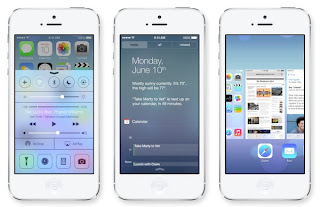
iOS 7: New kids’ category ‘parents will love’
But will Apple’s new ‘curated selection’ features curb unauthorised in-app purchases?
With the launch of Microsoft’s XBOX One, Sony’s PS4 and
Nintendo’s slew of new games titles this week, you could be forgiven for
feeling a bit indifferent about tech news.
Yet while the gaming world went into overdrive, Apple
announced some remarkable changes of their own.
At Apple’s Worldwide Developers Conference 2013 (WWDC) all
eyes were on the release of its new operating system. While many were in awe of
the dramatic design changes, Eddy Cue, Apple’s Service Boss explained a feature
that ‘parents are going to love’: the upcoming addition of a new Kids category
to the firms App Store.
While the presentation swiftly passed over this, and on to
their more mainstream releases such as the new Apple iRadio, parents and
children’s app developers were left wanting to hear more.
Never one to shy away from a challenge we took it upon
ourselves to investigate further the key features and to bring you a round-up
of what the new Kids’ category means for parents and educators.
Posted by
LearnersCloud
at
08:53
Friday, 7 June 2013
‘Mobile learning is eating the world’
The title, taken from Benedict Evans’ proclaimed research presentation may sound somewhat sensationalist but the figures he cites give it substance.
Whether you’re directly involved in ICT integration within your school, college or district or just an information seeker, Benedict’s findings show the increasing impact mobile devices have had over the past few years and highlight the inevitability of the future of mobile devices, both in consumer markets and in the education sector.
The conclusion drawn from this body of research is not just that mobile learning and mobile browsing is on the rise but that in the coming years mobile devices will infiltrate all aspects of our lives.
Below, I’ve embedded Benedict’s presentation: as you’ll see the study is presented as a short slide show with the stats speaking for themselves.
Posted by
LearnersCloud
at
09:24
Thursday, 23 May 2013
Flipped learning: key criticisms explained
In our previous blog posts, flipped learning has been a topic that's gained immense interest, but it has also been one that has split opinion.
While many believe the flipped approach will transform the future of education, others see it simply as a way of replacing an hour-long classroom lecture with an hour-long video and with little emphasis on interaction.
Monday, 4 March 2013
Alternative teaching methods: freedom to learn
Students making up their own rules may sound like a recipe for mayhem but in a report by euronews, the staff at Summerhill School in south-east England argue that it can have a considerable and positive effect.
Monday, 4 February 2013
How can cloud computing improve educational performance?
Technology has continuously impacted on the way we teach young people. In the 1950s learning theorists concluded that repeated drills and the repetition of content-supported learning and more specifically recall. This led to the introduction of listening stations in the classroom where students were able to use headphones to listen to audio tapes and cassettes. This progressed to the integration of video tapes a year later and the trend has not slowed since.
Today, technology is advancing quicker than ever and, as it does, schools and learning institutions are starting to gain pace with new technologies − a very welcome change, if you ask us.
Posted by
LearnersCloud
at
13:45
Thursday, 24 January 2013
Does performance-related pay equal better teachers?
How opinions are split over the new pay structures set for September 2013
From September 2013, head teachers across England will have the power to give their staff a pay rise according to their perceived performance against targets.
Offering children the best education possible is what teachers, parents and the Government all want but will performance based pay incentives mean a higher standard of teaching?Some academy schools in England already have the power to pay according to performance. Proponents of the new scheme suggest that it should be the case that teachers are rewarded for their effort and achievements even if this does mean that not all will see their pay rise year-on-year.
Posted by
LearnersCloud
at
12:02
Friday, 11 January 2013
3k exhibitors, 20k new products… it could only be the Consumer Electronics Show 2013!
It’s that time of the year again where over four days 3,000 exhibitors, many of which are tech leaders in their respected markets, descend upon the Consumer Electronics Show (CES) to showcase this year’s most innovative and inventive tech products.
First held in New York City in 1967 the show has a long history of announcing some of the world’s most influential tech products such as the VCR (1970), CD player and camcorder (1981), DVD (1996, HDTV (1998) and the Microsoft XBOX in 2001.
Thursday, 13 December 2012
Are UK universities about to embark on a global online revolution?
In the USA, a global phenomenon in online learning is taking place and many education technologists are anticipating a similar wave in the UK, albeit a much slower one.
Moocs – massive online open courses – have become a national success in the USA, yet over here distance learning remains a niche concern, often seen as a side project for UK universities to cash in on international and postgraduate course fees.
The contrast between nations is stark: while UK universities have only begun to dip their toes in, venture capitalists and leading higher-education institutes in the States are investing millions into the development of ground-breaking new moocs. On offer are free online courses to mass numbers of students across the states and internationally.
Moocs – massive online open courses – have become a national success in the USA, yet over here distance learning remains a niche concern, often seen as a side project for UK universities to cash in on international and postgraduate course fees.
The contrast between nations is stark: while UK universities have only begun to dip their toes in, venture capitalists and leading higher-education institutes in the States are investing millions into the development of ground-breaking new moocs. On offer are free online courses to mass numbers of students across the states and internationally.
Posted by
LearnersCloud
at
09:56
Thursday, 6 December 2012
Ensure digital technology meets the needs of students, today and tomorrow
‘Do not confine your children to your own learning, for they were born in another time’
Hebrew Proverb
Innovation in technology – from smartphones and smart TVs to tablets and even Leap pads for primary school students – has propelled our children into a digital age. A time where the average teen sends 60 texts a day, where they check and update their social statuses daily and where the average student spends from 6.5 to 10 hours a day consuming media, most of which is in a multi-activity environment. Young learners are experiencing new advances, opportunities, pressures and challenges far different from that of their parents, teachers, head teachers and school board members.
Hebrew Proverb
Innovation in technology – from smartphones and smart TVs to tablets and even Leap pads for primary school students – has propelled our children into a digital age. A time where the average teen sends 60 texts a day, where they check and update their social statuses daily and where the average student spends from 6.5 to 10 hours a day consuming media, most of which is in a multi-activity environment. Young learners are experiencing new advances, opportunities, pressures and challenges far different from that of their parents, teachers, head teachers and school board members.
Monday, 26 November 2012
Changes in Education: Helping parents prepare
'Just
weighing a pig doesn’t fatten it’ is one saying that can lead to a very heated
discussion in educational circles. The suggestion is that frequent testing does
not necessarily lead to improved performance. In recent years, schools have
been required to test at certain times of a pupil’s school life and the purpose
has been to inform on pupil progress and assess the quality of teaching given
in each school. Those in favour of more assessment believe that this is an
important tool in keeping schools on their toes and meeting the expectations of
the service user (basically the parents). Those against it feel it just leads
to more teaching directed to pass exams and less attention to activities that
put the subject into a real-life context, or that allow students to investigate
areas that are off the main core syllabus and stimulate original thought.
Posted by
LearnersCloud
at
12:50
Tuesday, 20 November 2012
Understanding cloud computing in the education sector
In the last few years the term ‘cloud computing’ has become
synonymous with new software releases and internet-based applications. Yet
whether you’re an EdTech enthusiast or a teaching professional who is indifferent
to the use of educational technologies, cloud computing will become an
increasingly important part of the way you store, access and manage your teaching
resources and data.
Posted by
LearnersCloud
at
14:11
Friday, 9 November 2012
Students study for longer and more efficiently with smartphones
![]() |
| Motivate your learners: download for FREE |
The adoption of smartphones has given rise to a massive shift in consumer behaviour – new data from StudyBlue® suggests that education is no exception.
Based on data of nearly one million students (conducted in 2011), those that use Android or iPhone learning apps spend an additional 40 minutes studying per week compared to those that use online-only platforms. Mobile learning apps such as LearnersCloud’s GCSE eLearning resources turn normally unproductive time into opportunities for study.
Posted by
LearnersCloud
at
15:41
Subscribe to:
Posts (Atom)